2008年1月13日星期日

Influenza - When To Call a Doctor

Call your health professional immediately if:

  • Your baby is younger than 3 months and has a rectal temperature of 100.4° (38°) or higher.
  • You suspect your baby younger than 3 months has a fever, but you are unable to measure his or her temperature.
  • You think or know your child younger than 4 years has an extremely high fever [105°F (40.56°C) or higher measured rectally].
  • You or your child 4 years of age or older has an oral temperature over 104° (40°).
  • You or your child has labored, shallow, rapid breathing with shortness of breath.
  • You or your child has a fever with a severe headache or stiff neck or seems confused or hard to wake.

Call your health professional if:

  • Symptoms had improved but seem to be getting worse again.
  • Signs of Reye's syndrome, such as drowsiness and confusion, develop 3 to 7 days after the start of symptoms of the flu or another viral respiratory illness. Reye's syndrome can be a very serious illness in children and teens.
  • Signs of a bacterial infection develop, such as an ear infection, bronchitis, or pneumonia.
  • Influenza develops in a person older than 65 who has other health problems (lung, heart, or kidney disease or diabetes) or in someone who is being treated with chemotherapy for cancer.
  • Influenza develops in a person of any age who has a long-term respiratory illness, such as asthma or chronic obstructive pulmonary disease (COPD).
  • Symptoms include temperature over 101° (38.3°), shaking chills, and a cough that produces mucus from the lungs (productive cough).
  • Fever is high or prolonged. See the fever guidelines for ages 3 and younger or for ages 4 and older. However, it is common for adults with the flu to have high fevers [up to 103° (39.4°)] for 3 to 4 days. If many people in your community have similar symptoms and it is flu season, it is likely you have the flu and don't need to see a health professional. However, if you have any concerns, contact your health professional.

Watchful Waiting

In most healthy people, the flu will go away in 5 to 7 days, though fatigue can last much longer. Although you may feel very sick, home treatment is usually all that is needed. If it is flu season, you may just want to treat your symptoms at home. Watch closely for signs of a bacterial infection, such as nasal drainage that changes from clear to colored after 5 to 7 days and symptoms that return or get worse.

Early treatment (within 48 hours of your first symptoms) with antiviral medications may reduce the severity of influenza. However, it is not certain whether antiviral medications can prevent serious flu-related complications. 3 Complications, which occur especially in infants, older adults, and people who have chronic health problems, may require a visit to a health professional and care beyond home treatment.

Call your health professional if you have any concerns that your symptoms are caused by something other than the flu.

Who To See

These health professionals can diagnose and treat the flu:

Nurse practitioner
Physician assistant
Family physician
Pediatrician
Internist

A doctor who specializes in treating infectious diseases may be needed if the diagnosis is unclear or if severe complications develop.

To prepare for your appointment, see the topic Making the Most of Your Appointment.

Naturopathic Medicine

What is naturopathic medicine?

Naturopathic medicine (or naturopathy) is based on the belief that the body can heal itself naturally. Naturopathic medicine attempts to improve health, prevent disease, and treat illness by promoting the use of organic foods and exercise; encouraging a healthy, balanced lifestyle; and applying concepts from other areas of complementary medicine (such as ayurveda, homeopathy, and herbal therapies).

Naturopathy was developed in the late 1800s in the United States. Today, a licensed naturopathic doctor (ND) attends a 4-year, graduate-level naturopathic medical school and studies the same basic sciences as a medical doctor (MD). However, the ND also studies alternative approaches to therapy, such as herbal medicine, acupuncture, and bodywork.

Most traditional naturopathic physicians (naturopaths) believe in natural therapies, such as nutritional and lifestyle counseling. They generally avoid prescribing medicines or performing surgery. However, some naturopaths prescribe herbal medicines, homeopathic dilutions, nutritional supplements, or perform minor surgeries. The disagreement over specific practice guidelines and licensing requirements in different states has led to some public confusion about the role of the naturopath.

What is naturopathy used for?

People use naturopathic medicine for promoting good health, preventing disease, and treating illness. Most naturopaths can treat earaches, allergies, and other common medical problems. Naturopathic medicine tries to find the underlying cause of the condition rather than focusing solely on treating symptoms. A properly trained naturopathic physician works with other health professionals, referring people to other practitioners for diagnosis or treatment when appropriate.

Is naturopathy safe?

Two of the biggest concerns about naturopathic medicine are the use of dietary fasting and a bias against immunization (vaccinations).

  • Talk with your medical doctor before fasting (not eating or drinking, or consuming only liquids for a period of time). Fasting can be dangerous, especially if you have a disease such as diabetes.
  • Some naturopaths do not believe that immunization is necessary. Before immunizations became available, childhood illnesses caused large numbers of deaths and long-term health problems and provided survivors with natural immunity. The benefits of immunization greatly outweigh the risks. 1

Always tell your doctor if you are using an alternative therapy or if you are thinking about combining an alternative therapy with your conventional medical treatment. It may not be safe to forgo your conventional medical treatment and rely only on an alternative therapy.

Naturopathy licensing varies from state to state. Not all states require naturopaths to be licensed. Also, not all naturopathic educational programs are the same. Some schools grant degrees that are not accepted by state licensing boards. In the United States, the Council on Naturopathic Medical Education (CNME) is the only agency recognized by the U.S. Department of Education to accredit naturopathic programs and colleges.

Before you choose a naturopath, find out whether the person graduated from an accredited college. Also check to see whether your state has licensing laws that govern the practice of NDs. If your state licenses NDs, ask your prospective ND whether he or she is licensed.

Related Information

References

Citations

  1. Centers for Disease Control and Prevention (2003). Six common misconceptions about vaccination and how to respond to them. Available online: http://www.cdc.gov/nip/publications/6mishome.htm.

Credits

Author Christopher Hess
Author Paul Lehnert
Editor Geri Metzger
Editor Nancy Reid
Associate Editor Michele Cronen
Associate Editor Tracy Landauer
Primary Medical Reviewer Adam Husney, MD
- Family Medicine
Specialist Medical Reviewer Marc S. Micozzi, MD, PhD
- Policy Institute for Integrative Medicine
Last Updated July 7, 2005
Last Updated: July 7, 2005

© 1995-2007, Healthwise, Incorporated, P.O. Box 1989, Boise, ID 83701. ALL RIGHTS RESERVED.

This information is not intended to replace the advice of a doctor. Healthwise disclaims any liability for the decisions you make based on this information. For more information, click here. Privacy Policy. How this information was developed.

Changes to Expect

Some women continue to menstruate normally until the onset of menopause and then simply cease to have periods. But for most women, the transition is not so orderly. You can expect to see a variety of changes. What they are and why they happen is the subject of the discussion that follows. Under other headings, you'll find more on the symptoms and management of the most troubling of these problems.

Changing Hormonal Patterns

A woman's egg supply, as much as 2 million in the ovaries at birth, is programmed for depletion. When the supply is almost exhausted because of the aging process, or the ovaries are surgically removed, the menstrual cycle comes to an end. In fact, the reproductive cycle begins to change several years before menopause, a period referred to as perimenopause.

During this time, typically starting in the late 40's, the ovaries' response to the various stimulating hormones produced by the brain becomes unsynchronized, until eventually the aging ovaries fail to respond at all. They start to produce less progesterone, losing their ability to ovulate and develop the subsequent corpus luteum. When ovulation stops, estrogen levels decline and menstruation ceases.

As ovulatory cycles become more irregular throughout perimenopause, the body's sensitive hormonal rhythm is thrown off and menstruation may vary more from month to month. In addition, two hormones known as androgens begin to play a bigger role. Though referred to as male sex hormones, they are in fact produced in small amounts by the female body as well. As levels of the female hormones decline, the impact of these "male" hormones can increase.

The bottom line is that fluctuating blood levels of hormones during the transitional years can create a number of physiological changes. These may be less unsettling for women who have an understanding of what their bodies are going through.

Menopause at a Glance

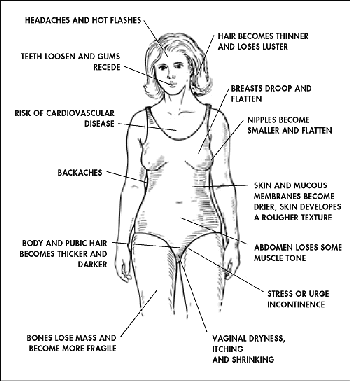
The wide array of problems shown in this diagram may seem daunting; but fortunately, few women experience every one of them. Hot flashes are the most common complaint. However, these annoying sensations pass in due course, while other symptoms may pose a much greater long-term threat. Be particularly alert for lower back pain, which may signal the onset of osteoporosis, the bone-weakening disorder that leaves older women prey to fractures. Remember, too, that menopause robs you of estrogen's protective effect on the heart, and that heart disease is the Number One killer of women. (For more information, see "Heart Disease: The Greatest Threat of All.")

Changes in the Menstrual Cycle

Cyclical Changes occur for the vast majority of women whose periods do not just stop. The perimenopausal years may be marked by skipped menstrual periods, heavier or lighter than usual bleeding, and changes in the frequency of cycles. During some menstrual cycles, no egg may be produced; these are called anovulatory cycles.

Light, short, or skipped periods occur as the ovaries' hormonal response becomes unpredictable. Heavy and prolonged bleeding arise when a longer than normal release of estrogen overstimulates growth of the uterine lining. The lining may be irregular or thickened and may not slough off completely or evenly, causing menstruation to stop and start again. Clotting may be noticeable in menstrual bleeding.

The physical changes that accompany the menstrual cycle may also become less predictable and regular. Such signs as breast tenderness, fluid retention and headache may occur at unpredictable times.

Fertility declines as a woman enters her 40s, but it does not disappear entirely until menopause is complete. To avoid unplanned pregnancies, doctors recommend using birth control until a full year has passed since the last menstrual cycle.

Muscle Tone and Elasticity

Skin and mucous membranes in various parts of the body become drier because of the decline in estrogen levels and the aging process in general. Women who once worried about oily skin may now find their skin dry and itchy and may need to apply moisturizers and hand creams.

As the body ages and the estrogen level declines, the fatty layer beneath the skin surface that makes the skin appear supple and youthful begins to shrink from a loss of elasticity and moisture. The outer skin layer is now looser than the deeper layers, and begins to fold and wrinkle. The skin may also develop a rougher texture.

During midlife, it is especially important to protect your skin from the sun. Aging skin produces less melanin, the pigment that causes your skin to tan instead of burn. This decreases your natural protection from harmful UV rays.

Thinning skin also reveals any harmful effects of previous years of sun exposure. Limiting sun exposure and using sunscreen is a prudent and effective way to delay aging of the skin.

Vaginal Changes are the first sign of approaching menopause for some women, while many do not notice changes until five to ten years after menopause. As estrogen levels drop, the vulva and vagina lose elasticity, resulting in vaginal dryness, itching and a shrinking process known as vaginal atrophy in which the vagina becomes shorter and narrower at the opening. Vaginal membranes also become thinner, hold less moisture, and lubricate more slowly. The thinner vaginal lining becomes more susceptible to tears. Reduced secretion of cervical mucus can add to the problem. The result of all these changes can be discomfort, vaginal infections, and painful intercourse.

Breast Changes are also apparent as estrogen's stimulation of the breast tissue is reduced, causing glandular tissue to shrink. Loss of elasticity causes the breasts to droop and flatten, losing their earlier fullness. Nipples become smaller and flatter and may lose their erectile properties.

Women who have been bothered by breast tenderness and cysts related to the menstrual cycle are often relieved to find that these symptoms disappear after menopause.

Abdominal wall tone may lessen gradually as we age, resulting in a protruding stomach. Regular exercise to strengthen the abdominal muscles can help maintain muscle tone.

A sudden increase in the size of the abdomen may be the first warning sign of ovarian tumors. Stomach enlargement may also be caused by inadequate nutrition or exercise, but should be seen promptly by your gynecologist.

Hair, Bones, and Teeth

Hair all over the body can change in texture and quantity during menopause. For some women, the increased effects of the body's androgens can result in darker, thicker and wiry body hair on the pubis, underarms, face, chest, lower abdomen, and back. This sprouting of excess, coarse hair, known as hirsutism, is usually related to hormonal changes. However, not all cases of hirsutism are menopause-related, so check with your physician for proper diagnosis.

The softer hair on your head also begins to change in texture as you reach your forties. A loss of luster occurs because individual hair shafts begin to thin and dry as a result of hormonal changes. The replacement process for normal daily hair loss becomes slower, and new replacement hair is generally dryer, with less shine. Many women also note a thinning of pubic and underarm hair after menopause. Female baldness, a rare problem, may begin about age forty. See a dermatologist if hair loss persists.

Changes in hair texture and thickness can be minimized by avoiding over-styling. Good nutrition can also slow the brittleness of hair that comes with normal aging.

Bone strength is critical at all ages but particularly during and after menopause. As estrogen and progesterone levels fall drastically, the bones begin to lose mass. This causes them to become progressively more fragile. Backaches, common in midlife, may indicate the beginning of bone loss as a result of declining estrogen levels. These pains are localized, beginning in the lower back. Severe loss of bone becomes a condition called osteoporosis, which strikes at least half of all women age 50 and older. In fact, by the time a woman is 80, she may have lost 40 percent of her bone mass. Osteoporosis leaves a woman vulnerable to bone fractures, especially in the hip, spine, and wrist.

Teeth and the mouth are similarly affected. Dental problems that can occur around midlife, such as receding gums or loose teeth, may be related to declining levels of estrogen and a loss of bone mass. Gingivectomy, a procedure to repair the gums after periodontal disease, is a common oral surgery procedure for women in midlife, especially for those prone to osteoporosis. Maintenance of your teeth and gums, including daily cleaning, and flossing, professional cleaning and regular checkups, will help reduce your risk of these dental problems.

Menopause: Myths and Realities

Myth: Menopausal women are unhappy and depressed.

Reality: Most women cope very well with the physical challenges of menopause. Serious mental health problems do not increase. While some women may experience emotional distress, this is often related to sleep disturbance and deprivation due to hot flashes.

Myth: All women going through menopause are plagued by hot flashes.

Reality: About 80 percent of American women experience only mild symptoms, or none at all, during menopause. When hot flashes do occur, in most cases they are mild and disappear after a few months, rarely persisting for more than 2 or 3 years.

Myth: Menopause is the end of your sex life.

Reality: Libido, or sexual desire, does decline with aging, but many women continue to enjoy a satisfying sex life deep into old age. Some women find sex more enjoyable after menopause when concerns about pregnancy are past.

When To Call a Doctor

Seek care immediately if you use medication to treat an erection problem (erectile dysfunction) and the erection lasts longer than 4 hours.

Seek care immediately if you have taken phosphodiesterase-5 inhibitors (such as Viagra, Levitra, Cialis) in the past 24 hours and are having chest pain. Tell your health professional you are taking this medication. Do not use any form of nitroglycerin if you have chest pain and have taken Viagra, Levitra, or Cialis in the past 24 hours.

Call a health professional if erection problems occur with:

  • Any type of injury to the back, legs, buttocks, groin, penis, or testicles.
  • A loss of pubic or armpit hair and an enlargement of the breasts.

Make an appointment to see a health professional within 1 to 2 weeks if an erection problem occurs more than 25% of the time and the problem:

  • Occurs with a persistent backache.
  • Occurs after you start taking a new medication or change the dose of a medication.
  • Is affecting your self-image or sense of well-being.
  • Has not improved despite self-care.

If your erection problem is occasional, there is no reason to call your health professional. If it occurs frequently but does not bother you or your partner, you may or may not choose to call your doctor. However, an erection problem that develops suddenly may be a sign of a disease; it is recommended that you see your doctor.

Watchful Waiting

Watchful waiting is a period of time during which you and your health professional observe your symptoms or condition without using medical treatment. A single episode of an erection problem is often a temporary and easily reversible problem. Do not assume it will happen again. If possible, forget about it and expect a more successful experience the next time. If you or your partner is concerned about it, talk about the problem and openly discuss your fears and anxieties.

If self-care has not helped after 2 weeks and you are concerned about your inability to have an erection, see a health professional who has experience in dealing with erection problems.

Who To See

Some health professionals, including doctors and mental health professionals, may not feel comfortable discussing sexuality and erection problems. Ask your health professional if he or she feels comfortable with and has experience in working with men who have erection problems.

The following health professionals can evaluate symptoms of erection problems:

If it is possible that a psychological problem is contributing to your erection problem, your doctor may refer you to a health professional such as a:

  • Psychiatrist.
  • Psychologist.
  • Certified licensed social worker.
  • Counselor with special training in sexuality or relationship problems.

To prepare for your appointment, see the topic Making the Most of Your Appointment.

Last Updated: July 26, 2004

© 1995-2007, Healthwise, Incorporated, P.O. Box 1989, Boise, ID 83701. ALL RIGHTS RESERVED.

This information is not intended to replace the advice of a doctor. Healthwise disclaims any liability for the decisions you make based on this information. For more information, click here. Privacy Policy. How this information was developed.

Study: Genetic glitch raises autism risk

(AP) -- A rare genetic variation dramatically raises the risk of developing autism, a large study showed, opening new research targets for better understanding the disorder and for treating it.

art.genetics.graphic.jpg

Research into the causes of autism has focused on genetic causes because so many families have multiple children with the disorder. Thus far, only about 10 percent of autism cases have a known genetic cause. Boston, Massachusetts-area researchers estimate the gene glitch they've identified accounts for an additional 1 percent of cases.

They found that in people with autism, a segment of a chromosome that has genes linked to brain development and various developmental disorders was either missing or duplicated far more often. The defect was inherited in some cases, but more often the result of a random genetic accident.

The results from the Autism Consortium study, released online Wednesday by the New England Journal of Medicine, confirm those of smaller studies by U.S. and Canadian research groups in the past year. The consortium verified its findings by checking two other DNA databases.

"They really did nail it," said Dr. Andrew Zimmerman, director of the Kennedy Krieger Institute's Center for Autism & Related Disorders in Baltimore, Maryland, who was not involved in the research. Video Dr. Sanjay Gupta explains the study findings »

He predicted children with newly diagnosed with autism or other developmental disorders now will be tested for this defect on chromosome 16 and that studies of many more DNA samples may reveal other autism-related gene variations.

Already, the findings are starting to be used to give some parents long-sought answers to burning questions: What caused autism in their child and how likely is it that any future children also would have autism, long known to run in families?

Autism resources

"We've provided very compelling evidence that this particular small stretch of the genome provides an important clue to the biological roots of autism," said lead researcher Mark J. Daly, an assistant genetics professor at Harvard Medical School and an investigator for the consortium, which includes researchers from 14 Boston-area universities and medical centers.

When the biological pathways involved are figured out, scientists can try to design drugs to target chemicals in the brain to treat autism, said Geraldine Dawson, chief science officer of the advocacy group Autism Speaks.

"I think chromosome 16 is now going to be a hotbed for autism research," said Thomas Lehner, head of the genomic research branch at the National Institute of Mental Health. "It gives us a very important lead."

Another study researcher, Dr. David Miller of Children's Hospital Boston, said the chromosome 16 variations increased the risk of autism a hundredfold. But he said the disorder must be due to a combination of genetic variations since there were cases of people who had the defect but didn't have autism.

Autism, a complex, poorly understood disorder, is characterized by repetitive behaviors and poor social interaction and communication skills. Research has mainly centered on genetic causes, and on whether it could be caused by the mercury-based preservative once used in childhood vaccines, which has been repeatedly discounted.

The number of children with diagnosed autism has risen in recent years to as many as one in 150 American children, but experts are unsure whether its prevalence really is increasing or the trend is due to a broader definition of autism.

Health Library

For their study, consortium researchers scanned all 46 chromosomes from DNA samples from 1,441 children with autism or related disorders. They also scanned DNA from most of their parents and 2,800 other people, none known to have autism.

The researchers found a 25-gene segment of chromosome 16 was missing in five children with autism; none of their parents had the deletion. That shows that in some cases the genetic glitch is not inherited from the parents, but instead due to a random accident while an egg or sperm is being formed.

advertisement

An additional seven autistic children had a chromosome 16 duplication, but all but one had parents with the same duplication.

The researchers confirmed their findings by looking at DNA databases from Children's Hospital Boston and Iceland. The same defect was found in 1 percent of those with autism or related disorders. It was found in just seven of about 19,000 Iceland samples from people without the disorder.

2008年1月12日星期六

Macrobiotic Diet

What It Is

A macrobiotic diet isn't simply a diet plan. It's a way of life. If you're drawn to the concept of eating a natural, organic, plant-based diet (with a little fish) and embrace a Zen-like spirituality in both your life and food selections, then a macrobiotic diet may be for you.

Originally from Japan, the principle behind the macrobiotic diet combines tenets of Zen Buddhism with a Western-style vegetarian diet. Much more than a list of recommended foods, it is all about a spiritualism that transcends lifestyle, attitude, and diet practices. The word "macrobiotic" comes from the Greek and essentially means "long life" or "great life."

The macrobiotic diet regimen supports an Eastern philosophy of balancing foods to attain a balance of yin and yang. To achieve that balance, foods are paired based on their sour, sharp, salty, sweet, or bitter characteristics.

Yin foods are cold, sweet, and passive while yang foods are hot, salty, and aggressive. Some foods are prohibited because they contain toxins or fall on the far end of the spectrum, making it difficult to achieve and respect a Zen-like balance.

Early versions of the macrobiotic diet included several stages that became progressively more restrictive and ending with a diet of brown rice and water -- considered the ultimate in yin and yang. Today, the Americanized version is a modified vegetarian plan.

Although not scientifically proven, a macrobiotic diet of wholesome, nutritious foods may protect against cancer and other chronic diseases.

What You Can Eat

Practitioners of the macrobiotic diet prefer locally grown, natural foods prepared and eaten in the traditional manner, such as baking, boiling, and steaming. Lots of grains, vegetables, beans, fermented soy, and soups -- supplemented with small amounts of fish, nuts, seeds, and fruits -- are the basis of the macrobiotic diet menu. Other natural products, however, may be included to accommodate individual needs or during dietary transition.

It is essentially a "flexitarian" diet plan -- a mostly vegetarian diet that allows you to eat occasional meat or fish -- with rules governing eating, cooking, and lifestyle practices such as eating slowly and chewing food thoroughly.

Foods should be consumed in their most natural state and processed foods are not recommended. Other excluded foods are fatty meats, most dairy, sugars, coffee, caffeinated tea, stimulating beverages, alcohol, chocolate, refined flour, very hot spices, chemicals and preservatives, poultry, potatoes, and zucchini.

The diet also allows you to consume certain fruits and vegetables such as tomatoes, eggplant, and peppers in limited quantities. Excluded foods are considered to be extreme, overstimulating, or too concentrated and therefore not capable of achieving balance.

Vitamin and mineral supplements are frowned upon, yet seeking nutritional balance may be impossible without them, says Dawn Jackson Blatner, a spokeswoman for the American Dietetic Association. "Consult a registered dietitian to help you balance the yin-yang and nutritional completeness of your plan. Otherwise you could end up with nutritional deficiencies," she advises.

Here's a breakdown of a typical macrobiotic diet:

  • Whole grains, especially brown rice: 50%-60%
  • Vegetables (and seaweed): 25%-30%
  • Beans: 5%-10%
  • Fish, nuts, seeds, fruits, miso soup: 5%-20%
  • Soup (made from ingredients above): 1-2 cups/day

What You Can Eat

Practitioners of the macrobiotic diet prefer locally grown, natural foods prepared and eaten in the traditional manner, such as baking, boiling, and steaming. Lots of grains, vegetables, beans, fermented soy, and soups -- supplemented with small amounts of fish, nuts, seeds, and fruits -- are the basis of the macrobiotic diet menu. Other natural products, however, may be included to accommodate individual needs or during dietary transition.

It is essentially a "flexitarian" diet plan -- a mostly vegetarian diet that allows you to eat occasional meat or fish -- with rules governing eating, cooking, and lifestyle practices such as eating slowly and chewing food thoroughly.

Foods should be consumed in their most natural state and processed foods are not recommended. Other excluded foods are fatty meats, most dairy, sugars, coffee, caffeinated tea, stimulating beverages, alcohol, chocolate, refined flour, very hot spices, chemicals and preservatives, poultry, potatoes, and zucchini.

The diet also allows you to consume certain fruits and vegetables such as tomatoes, eggplant, and peppers in limited quantities. Excluded foods are considered to be extreme, overstimulating, or too concentrated and therefore not capable of achieving balance.

Vitamin and mineral supplements are frowned upon, yet seeking nutritional balance may be impossible without them, says Dawn Jackson Blatner, a spokeswoman for the American Dietetic Association. "Consult a registered dietitian to help you balance the yin-yang and nutritional completeness of your plan. Otherwise you could end up with nutritional deficiencies," she advises.

Here's a breakdown of a typical macrobiotic diet:

  • Whole grains, especially brown rice: 50%-60%
  • Vegetables (and seaweed): 25%-30%
  • Beans: 5%-10%
  • Fish, nuts, seeds, fruits, miso soup: 5%-20%
  • Soup (made from ingredients above): 1-2 cups/day

How It Works

Followers of the macrobiotic diet believe that food and food quality impact health, happiness, and well-being. Eating natural food that is closer to the earth and less processed is healthier for the body and soul. One of the objectives is to become more sensitive to the food you eat and how it affects your life. Ultimately, this awareness will enhance your life and health.

What you can eat may be adjusted according to the following:

  • Season
  • Climate
  • Activity
  • Age
  • Sex
  • Health and any other personal considerations

'The Biggest Loser' Diet

What It Is

You, too, can be The Biggest Loser by following a diet and fitness program similar to that used by contestants on the NBC TV show of the same name. There are no televised temptations of cheesy pasta or gooey brownies for home dieters, no diet pills or personal trainers -- just a healthy diet and plenty of exercise.Â

This is a low-calorie diet based on the Biggest Loser pyramid of 4-3-2-1 (four servings of fruits and veggies; three of lean protein; two of whole grains; and one "extra"), along with good old-fashioned exercise. Eat a diet based largely on fruits, vegetables and lean protein, add a heavy dose of physical activity and you will recipes, lower cholesterol, decrease blood pressure, and become stronger and more energized.

Tufts University obesity clinician and researcher Michael Dansinger, MD, developed the weight loss program accompanied by dietitian and chef Cheryl Forberg, RD, and trainers Bob Harper and Jillian Michaels, working with writer Maggie Greenwood-Robinson, PhD.

Over the course of the 12-week program, you can expect to eat small, frequent meals containing plenty of fiber and protein, for fullness without too many calories.

"We emphasize the quality of the calories so you can meet your nutritional needs [and] enjoy more natural, healthy whole foods and lean proteins that will help you deal with hunger before it happens," says Forberg.

And you won't be eating any "appetite stimulating" white foods like bread, pasta, or potatoes. Keeping daily food logs, watching portion sizes, and drinking 48-64 ounces of water each day round out the basic plan.

You can also count on daily workouts, starting at 30 minutes and increasing to an hour. The book contains a detailed cardio and strength-training program that increases in intensity for a "fat-busting boost." You'll also find plenty of tips and inspiration from former contestants throughout the book.

Sounds simple enough, but when you don't have a personal trainer pushing you, as the TV contestants have, how do you stay motivated? You can join The Biggest Loser club for online support, meal plans, recipes, customized fitness information, a journal, and more for about $5 per week.

What You Can Eat

The book includes one-week sample meal plans for 1,200-, 1,500- and 1,800-calorie diets, along with some recipes. Forty-five percent of the total calories come from carbohydrates, 30% from protein, and 25% from fat.

The 4-3-2-1 Biggest Loser Pyramid sets the stage for number of servings from each of the food groups:

  • 4 servings of fruits and vegetables
  • 3 servings of protein -- lean, vegetarian, or low-fat dairy
  • 2 servings of whole grains
  • 1 extra of fats, oils, sweets, alcohol, or your choice, equivalent to 200 calories

Here's a sample meal daily plan:

Breakfast: 1/2 serving protein, 1 serving whole grain, 1 serving fruit

Snack: 1/2 protein, 1 fruit

Lunch: 1 protein, 1/2 whole grain, 1 vegetable

Snack: 1/2 protein, 1 fruit

Dinner: 1/2 protein, 1/2 whole grain, 2 vegetables

Dieters are urged to choose foods that are not processed and contain no added fats, sugar, or salt. "Read food labels, and if you can't pronounce some of the ingredients on the list, don't buy it," suggests Forberg.

Whole fruits and vegetables are preferred over juices or dried fruits. Foods should be eaten raw or prepared simply without extra fats. Whenever fats are used, they should be healthy fats -- not saturated or trans fats.

Dieters should choose whole grains that are less refined and have at least 2 grams of fiber per serving of bread or 5 grams of fiber per serving of cereal, with no more than 5 grams of sugar. Protein choices include lean meat or fish, vegetarian protein, or low-fat dairy. Your calorie level determines portion sizes and your protein options.

Still hungry? You can eat more than four servings a day of fruits and vegetables.

How It Works

It works because you burn more calories than you eat, and if you follow the prescription for eating healthy, whole foods every few hours, you shouldn't have to deal with hunger.

"When you eliminate refined starches and sugars or the appetite stimulating foods, hunger and appetite go way down because blood glucose and insulin spikes are minimized," says Dansinger.

Meals are scheduled frequently to help dieters avoid hunger. In addition, portion sizes are monitored and detailed records kept of food intake.

Your starting calorie level is determined by multiplying your current weight by 7 (On the television show, they use a factor of 6 for quicker results). The recommendations range from a low of 1,050 calories for a 150-pound person to a high of 2,100 calories for a 300-pound person.

Most people eat more than they think, so in essence the low end is probably closer to a 1,200-calorie diet," says medical director Dansinger.

As you start losing weight, you'll recalculate your calorie level and take in fewer calories or get more exercise. "If you want to maintain a fairly aggressive weight loss, you may need to adjust your caloric intake to your lower weight," says Dansinger.Â

The book also includes tips for weight maintenance once you've reached your goal. "We base our recommendation on 10-12 calories per pound and an hour per day of exercise for maintenance," says Dansinger.

You can avoid the ups and downs of "yo-yo" dieting if you follow these five nuggets of advice from contestants who have lost weight on The Biggest Loser and kept it off:

  1. Eat a healthy breakfast every day
  2. Enjoy fruit and/or vegetables with every meal
  3. Have protein with all meals and snacks
  4. Stay active
  5. Plan your meals, snacks, and exercise

What the Experts Say

Susan Bowerman, MS, RD, assistant director of the Center for Human Nutrition at the University of California at Los Angeles, gives the plan a thumbs-up.

"It is very similar to the plan we use at our clinics, using very low-fat and lean protein, lots of fruits and vegetables (with an emphasis on vegetables), and avoiding refined grains -- which has proven to be successful because the diet is very satiating," she says. She also recommends that dieters get plenty of omega-3 fatty acids, either in a supplement or by eating low-mercury types of fish twice weekly.

American Dietetic Association spokesperson Amy Jamieson-Petonic, MEd, RD, also endorses the plan -- as long as you consume at least 1,200 calories daily. "It is not recommended to consume fewer than 1,200 calories a day because it is difficult to obtain the necessary vitamins, minerals and nutrients needed for daily activities," she says.

Bowerman says the carbohydrate level in The Biggest Loser diet may not be enough for someone who is very active. "If you are functioning well and feel like you have enough energy for your workouts, then the level is fine," she says. "Otherwise, you might want to increase the carbs to meet your activity needs."

Multivitamins are not suggested in the book, but Bowerman recommends that anyone on a lower-calorie diet take a multivitamin for nutritional "insurance."

"Theoretically, you should be able to get everything you need from the plan," she says. "However there is no reason not to include a multivitamin for your age and sex, because oftentimes both men and women lack certain nutrients, like calcium, because of dietary preferences or intolerances."

Food for Thought

If you're motivated by the television program, you can be your own "biggest loser" at home with this sensible and straightforward approach.

"It is doable, easy to adopt, and offers a wide variety of choices of exercises and food, so people really can stick with it and let it become a lifestyle plan instead of a short-fix diet," says Forberg.

Everyone in the family -- even vegetarians -- can follow this plan as long as you modify portion sizes to meet individual nutritional needs.

"We don't use the word diet," says Forsberg. "It is a plan that can work for everybody because there is so much variety, it is based on science, and everyone can benefit from a nutrient-rich eating plan that will foster weight loss and promote optimal health."

Sticking to Diet Lies in Details

Focusing on the Details of What You Eat May Help You Heed Diet, Study शोव्स

Jan. 10, 2008 -- Dieting for the new year? Paying attention to the details of what you eat may help you stick with your diet plan.

"Consumers can enjoy themselves more by focusing on the details during their experiences," reports University of Minnesota marketing expert Joseph Redden, PhD, MBA. "This could help people following a repetitive regimen," such as a diet.

"People usually like experiences less as they repeat them; they satiate," Redden writes. Satiation, he says, "makes it hard to follow a diet."

Sound familiar? Then get specific about what you're eating.

For instance, instead of thinking "yet another salad," think "spinach salad with salmon." Or stop thinking "fruit for dessert again," and start thinking "apple," "banana," or whatever specific fruit you plan to eat.

Redden tested the detail-driven approach using jelly beans in five flavors: cherry, orange, peach, strawberry, and tangerine.

Redden gave 135 people 22 jelly beans, one at a time. As each jelly bean was dispensed, information about that jelly bean was displayed on a computer screen.

Some people saw general information, such as "jelly bean #7." Others saw flavor details, such as "cherry #7."

People got bored eating jelly beans faster if they saw the general information. And they enjoyed the experiment more if they saw the flavor details.

The message: Details cut down on that repetitive feeling and boost enjoyment, which in turn could help you stick with a diet.

The study appears in February's edition of The Journal of Consumer Research.

Pastor to men: Get thee to a doctor

COLUMBUS, Ohio (AP) -- After the fourth death in a week, Keith Troy decided enough was enough.

art.pastor.ap.jpg

Pastor Keith Troy says the New Salem Missionary Baptist Church will help men who can't afford to see a doctor.

Midway through Sunday services, he looked out at his congregation and asked all the men to rise. Then he asked: Would the deacons and associate ministers please assemble in the aisles with paper and pencil? Would every man write down his name and a phone number where he could be reached?

Too many church men were dying of preventable illnesses related to poor health, Troy told the congregation at New Salem Missionary Baptist Church, a predominantly black church of about 4,500 members, including about 900 adult men.

Their pastor of 24 years issued a simple order: Every man in the congregation will see a doctor in the next three months. If they can't afford it, the church will help pay. If transportation is a problem, someone from the church will drive them.

"But one way or another," Troy said that Sunday in late November, "every man in this church will be checked out."

"Amen," parishioners responded. "Amen."

The last straw had come three days earlier when Roland Burks, 58, died of complications from diabetes and high blood pressure, the day after he delivered Thanksgiving meals to the homeless.

"I plead guilty to being a pragmatist," Troy said in an interview. "What we do on Sunday has got to impact Monday through Saturday, and if not, what are we doing?"

He said he stood in the pulpit that Sunday and happened to see two doctors, members of the church, in the congregation.

"It just kind of came to me," Troy said. "We didn't have 900 meetings about it -- it was just one of those moments of inspiration."

Statistics show black men are among the least likely people to see a doctor regularly.

Three in 10 non-Hispanic black did visit a doctor or other health professional in the past 12 months, according to the national Centers for Disease Control and Prevention 2005 summary of national health statistics. Only Hispanic men (37 percent) were higher as a group.

Black men also have higher rates of high blood pressure than white or Hispanic men and a higher risk of dying from strokes than men and women from any other group. Black men also have higher obesity rates than white men or women.

Last year, the Baptist Educational and Missionary Convention of South Carolina, a predominantly black denomination, announced a partnership with the state to educate people about disease prevention and healthy living.

In Colorado, Denver's Center for African-American Health works with about 80 black churches to increase awareness among parishioners about preventing diabetes, heart problems and other chronic diseases.

"When the message comes from the church and the pastor, it comes with a very important push behind it and people do tend to trust that message," said Dr. Michelle Gourdine, a member of Union Bethel African Methodist Episcopal Church and the deputy secretary of health for Maryland.

The 1,300-member church in Randallstown, Maryland, offers annual programs on reducing cholesterol and high-blood pressure and runs a 10-week exercise class for just $10.

Fear of being perceived as weak keeps some black men from seeing doctors, as does historical distrust of the profession. Concerns about the cost of medical care also play a part. A 2004 survey by the Ohio Department of Health found that more than one in four black men in Ohio were uninsured, compared with fewer than one in five white men.

"We don't generally seek out health care unless we become incapacitated," said Dr. Augustus Parker, a black physician and a member of New Salem. "'I got a bum knee?' -- you wait until it's bone on bone and you can't walk. 'That chest pain I have? I just drink a bottle of Maalox and I feel better."'

Troy's order made Jimmy Logan, a church volunteer who helps handle parking on Sundays and a friend of Burks, realize that if he wants to continue serving others, he'd better look out for himself first.

He went to the doctor and had an arthritic knee drained but otherwise got a clean bill of health.

"It's one thing to preach the gospel, it's another thing to also have a sincere heart of caring while you're doing that," said Logan, 46, an adviser at a bank. "The combination of the two has left many of us just speechless."

Troy's call to medical action was not the first time he's departed from his Sunday script. In June, he asked all teenagers to stand up and talk about what they wanted to do with their lives after a boy in the congregation was murdered two weeks before graduation.

Since word got out about what he said that day from the pulpit, other churches have called for information, and local hospitals have asked if they can help.

Troy gets weekly updates on how many men have seen a doctor so far. He doesn't have a count yet, but says many of the church's men have participated.

Fat to fitness instructor: Boot camp helps man lose 120 pounds

ATLANTA, Georgia (CNN) -- Two years ago, Tim Lenczowski dreaded walking from the parking lot into his office.

Tim Lenczowski

Tim Lenczowski had heart problems before losing 128 pounds in Operation Boot Camp.

Weighing 335 pounds, Lenczowski suffered constantly from pain in his knees and ankles. Everyday activities such as walking and even traveling on an airplane had become difficult.

At the age of 39, he was diagnosed with a heart condition and hypertension (high blood pressure). He knew it was time to make a change and his doctor agreed.

"It was a chore to get to work. I had to park and then walk," says Lenczowski. "By the time I got to work I was sweating and I would have to time things so I could cool off before I had a meeting."

The extra weight not only took a toll on his physical health, but also was chipping away at his self-esteem. Lenczowski, who worked as a fundraiser for a nonprofit health organization, felt like a hypocrite. Video Watch Tim's incredible weight loss success story »

"People would see me then ... they didn't respect me," remembers Lenczowski. "How could I ask for money to support [the foundation] without practicing what I preached?"

Tim's weight loss tips

Find a plan that works for you
Try different programs to find the one that works for you. Take time to talk to the instructors and students to get a feel for the program and if it is right for you. Don't be afraid to change if it's not working for you.

Build a support system
You should not go at this alone. Rely on your friends and family to help support you every step of the way. Make sure your physician is part of your support team. Another great support system can come from a group workout program.

Set goals
Keep yourself accountable and track your successes. This will motivate you as you see how far you've come and set new goals. Celebrate every success along the way!

Keep yourself challenged
Once you get moving, make sure to keep pushing yourself to try new things, whether it's running your first race or taking a yoga class. Get out of your comfort zone and try something new.

Get your mind in the game
Losing weight and getting fit is a mental workout as much as a physical one. Make sure your mind is in the game and work to overcome the mental obstacles that come your way. Challenge the little voice inside you to keep pushing your body.

Have fun
My success was possible by making a lifestyle change and sticking to it. Making the workouts fun and enjoying the foods you eat will be much more enjoyable and help you stick with it in the long run.

Lenczowski struggled with weight for most of his life. He tried just about "every diet imaginable" and though he lost weight on some, he would always gain it back. A sedentary lifestyle and fast-food diet had caught up with him and as his 40th birthday approached, he'd become fed up and realized he didn't want to live out the next half of his life as a fat person.

Not knowing where to start, Lenczowski started walking because it was low impact. He walked a marathon and though it took him nine hours to complete, Lenczowski says he made some great friends in the process. After the race, the same friends asked him to try kickboxing.

"The thought of going to a gym was intimidating enough, but kickboxing?" Lenczowski recalls. "My friends kept on me until I caved and reluctantly decided to try it."

The first time he went to the class, Lenczowski says he sat in the parking lot for a while trying to muster up enough courage to walk into the gym. But once inside, he says everyone welcomed him. In eight months of kickboxing, fat burning classes and watching his diet -- he'd lost 60 pounds.

Lenczowski says he was ecstatic and his friends began pushing him to take the next step to get in shape -- boot camp.

"They pushed me into boot camp and I loved it," Lenczowski says. "It's the hardest thing I've done."

Lenczowski joined Operation Boot Camp which offers a one month program to increase fitness through exercise and proper diet. With the support of his friends and by pushing and challenging himself each month to move from the back of the class to the front, he started to see results.

"When I went to boot camp, I couldn't run a mile. I set that goal for myself and the instructors helped," Lenczowski says. "I thought, 'If I can run a mile, can I run a half-marathon?' "

Eight months later he had lost a total of 120 pounds. To date, Lenczowski has run five full marathons and 12 half-marathons, accomplishments he would have thought impossible five years ago.

How has his life changed?

Achieving various fitness goals was a tremendous boost to Lenczowski's self-confidence. The physical accomplishments began to have a positive affect on other aspects of his life as he realized he could do anything he set his mind to. Since losing weight, he's become more outgoing, happier, moved closer to a park, changed jobs and become a fitness instructor. He recently bought his own boot camp franchise.

"I encourage people to take that first step. I know it's hard, but you have to find the right program," Lenczowski says.

The dramatic weight loss and healthier lifestyle has also improved Lenczowski's physical health. He's no longer on heart medication and his doctor has greatly reduced his blood pressure medicines.

Lenczowski says the biggest key to his success was his network of support from friends, doctors and fitness instructors. As he approaches his goal weight, he's set a new goal of passing his experience on to others who want to lose weight.

"I meet new people and they don't look at the old Tim. They look at the person sitting here now -- more confident, funny, loves to give back and that's what I want to be remembered for."